Deck Installation In Greater Lansing
Looking for an expert deck installer for your home? Custom Built's deck installation in Lansing handles permits, manages every step, and backs every build with a Lifetime Guarantee. Free Quotes.

Professional deck installation is about more than just laying boards; it’s about ensuring the structural skeleton of your home’s new addition is engineered for the unique demands of the Michigan climate. Many homeowners mistakenly hire a general "installer" who may overlook critical local requirements like frost-line depth or proper ledger flashing. These shortcuts often lead to sagging frames, "heaving" footings, and safety hazards that don't appear until after the first heavy snow season.
As a premier deck builder in lansing, Custom Built provides a seamless Design-Build experience. Our installation crews are in-house professionals specifically trained in the technical nuances of Trex and TimberTech systems. We manage the entire lifecycle of your build, ensuring that every bolt, fastener, and beam meets the rigorous standards required to back our exclusive Lifetime Workmanship Guarantee.
Types Of Decks We Install
Trex Composite Deck Installation
As a TrexPro Platinum certified deck installer, we build low-maintenance composite decks designed to survive Michigan’s brutal freeze-thaw cycles without the need for annual staining.
- 30-Year Performance: Engineered to resist rot, moisture, and pests, providing one of the strongest long-term ROIs for your home.
- Enhanced Warranties: Our elite certification unlocks manufacturer-backed labor and material coverage that uncertified contractors cannot provide.
Traditional Wood Deck Installation
For homeowners who prefer the natural warmth of real timber, we install premium pressure-treated lumber decks built to exceed Michigan residential codes.
- Temperature & Comfort: Natural wood runs significantly cooler underfoot during peak Lansing summers, making it ideal for west-facing yards.
- Customization & Repair: Wood allows for total color control through custom stains and offers the flexibility of individual board replacement over time.
Multi-Level & Zoned Decks
Perfect for sloped Mid-Michigan lots, multi-level designs maximize your square footage by turning uneven terrain into intentional "outdoor rooms."
- Distinct Entertaining Zones: We design separate levels for grilling, dining, and lounging to ensure a smooth traffic flow during large gatherings.
- High Curb Appeal: Multi-level builds add significant architectural depth and perceived value compared to a standard flat platform deck.
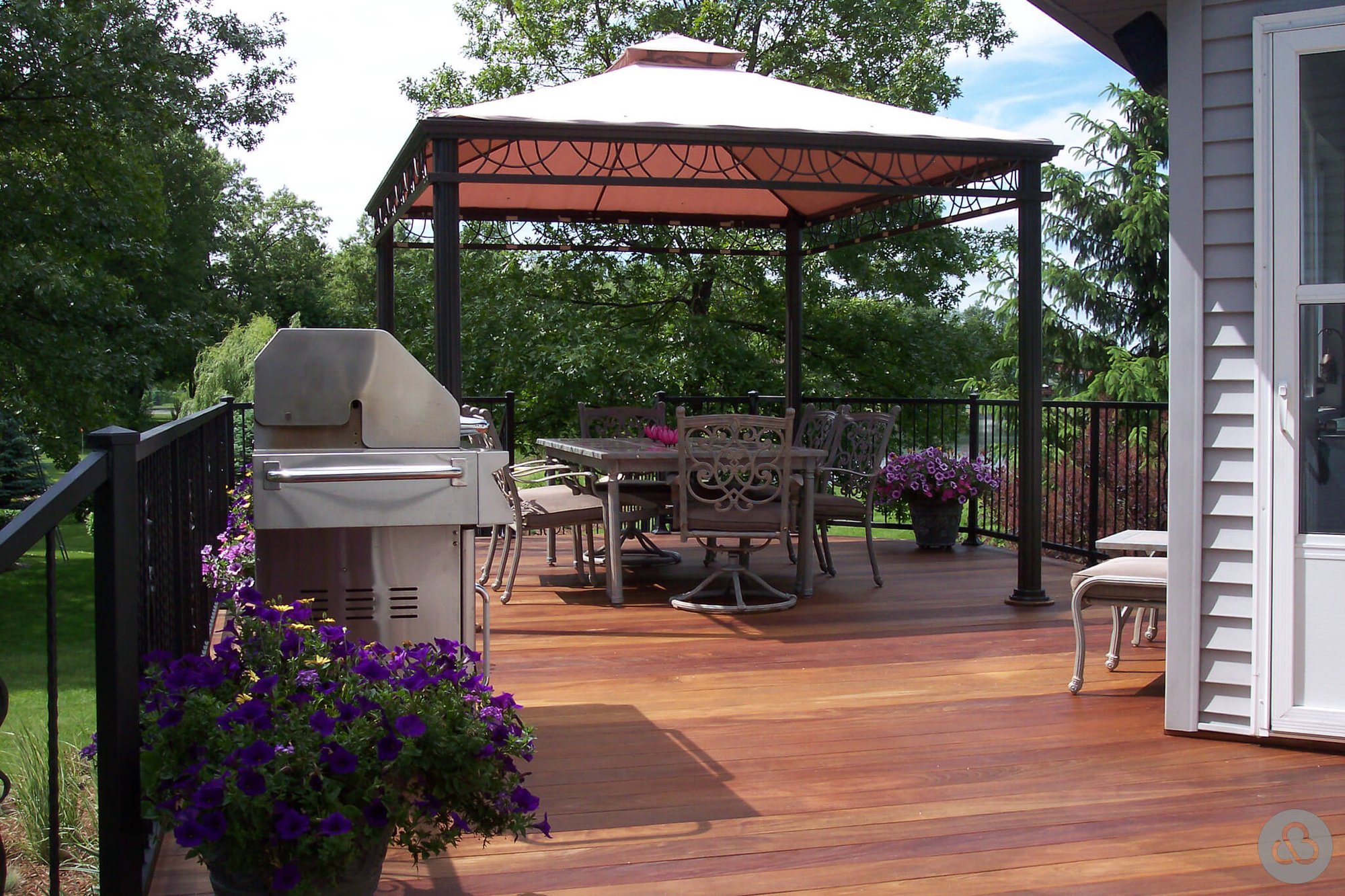
Covered Decks & Pergolas
In a climate with short summers, a covered structure extends your deck’s usability into the Michigan "shoulder seasons" of early spring and late fall.
- All-Weather Usability: Integrated pergolas and roof extensions protect your investment from rain and harsh UV rays, keeping the surface comfortable even at midday.
- Superior Return on Investment: Covered outdoor spaces are consistently rated as a top-tier exterior improvement for increasing a home’s resale value.
.png?width=675&height=1013&name=Composite%20Deck%20Projects%20(5).png)
TrexPro Platinum Installation Standards
As one of the few TrexPro Platinum contractors in Mid-Michigan, our installation techniques are factory-certified to ensure your material warranty is never compromised.
- Trex SunComfortable™ Technology: We specialize in the latest heat-mitigating materials that keep your deck surface cooler during direct-sun July afternoons.
- Precision Thermal Gapping: We use factory-specific spacing tools to account for the expansion and contraction of boards during Michigan’s 100-degree temperature swings.
Michigan-Specific Structural Engineering
A deck in Lansing has to handle more than just foot traffic; it has to support heavy snowpack and resist ground movement. Our installation process is built around these environmental pressures.
- 42-Inch Concrete Footing Standards: We don't take shortcuts with the foundation. Every structural post is set on a concrete footing dug to the 42-inch frost line to ensure your deck stays level for the next 30 years.
- Aluminum vs. Wood Framing: For the ultimate high-end installation, we offer aluminum framing options. Unlike wood, aluminum framing is 100% rot-proof, warp-proof, and fire-resistant—perfect for Michigan’s damp spring seasons.
- Advanced Waterproofing & Drainage: If you have an elevated deck, we can install integrated drainage systems during the build. This keeps the area below your deck dry, creating a second usable outdoor room.
Integrated "Smart Deck" Technology & Amenities
In 2026, a professional installation includes the integration of smart home technology directly into the deck’s structure. We plan these features during the framing phase so all wiring is hidden and protected.
- Automated Low-Voltage Lighting: We install riser and post-cap LEDs that can be controlled via your smartphone or integrated into your home automation hub.
- All-Season Comfort Integration: Our installers pre-wire structures for outdoor audio, TV mounts, and infrared heaters to extend your deck's usability into the late fall.
.png?width=1080&height=1080&name=Trex%20Pro%20Platinum%20Builder%20and%20Lifetime%20Workmanship%20warranty%20on%20Decks%20(2).png)
Why Choose Custom Built To Install Your New Deck?
- 20+ Years of Local Experience: We aren't a national franchise; we’ve built hundreds of projects specifically in the Greater Lansing area.
- Lifetime Workmanship Guarantee: We stand behind our structural integrity for the life of the build.
- We Handle All Permitting: You never have to deal with the City of Lansing or township building departments—we manage the paperwork from start to finish.
- Professional Design-Build Process: One team, one contract, and a unified flow from the first 3D rendering to the final inspection.
.png?width=1080&height=1350&name=Company%20Image%20(1).png)
Our Proven Design-Build Process

1. DREAM
It starts with a conversation. Your dedicated Project Development Advisor will reach out to learn about your project, understand your goals, and make sure we are the right fit before anything else happens.

2. DESIGN
Once we move forward, our design team comes to you. We gather measurements, build out your vision in 3D renderings, and finalize every selection before a single nail is driven.

3. BUILD
With every detail confirmed and permits in hand, our production team gets to work. You have one point of contact managing the entire build so you never have to wonder what is happening or who to call.
.png?width=500&height=500&name=Continue%20Relationship%20(1).png)
4. CONTINUE
Our relationship does not end at the final walkthrough. Every project comes with a Lifetime Workmanship Warranty and a team that stands behind their work for as long as you own your home.